
Poison ivy is a resilient perennial plant that spreads through both seeds and extensive underground root systems. Even when the visible leaves are removed, the roots can continue producing new shoots for years.
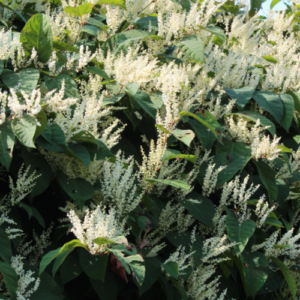
Japanese Knotweed
Not only is poison ivy unsightly, but contact with the plant can cause an itchy, painful rash that can last for weeks. Unfortunately, simply pulling or mowing poison ivy often makes the problem worse, allowing roots to regenerate and spread even further.
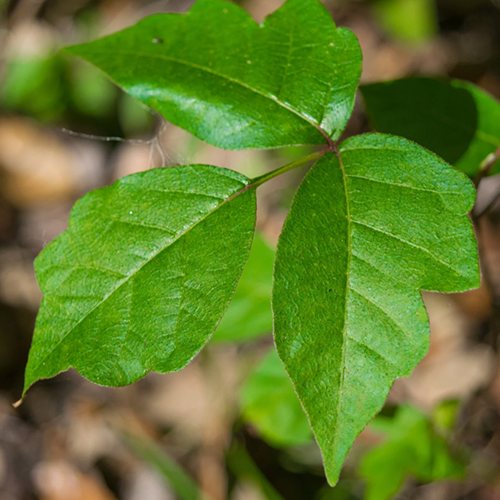
Poison Ivy
If you’re struggling with poison ivy on your property, you’re not alone. Poison ivy is one of the most common and frustrating invasive plants found throughout Maine. Whether it’s growing along fence lines, climbing trees, spreading through wooded areas, or creeping into your lawn and landscape beds, poison ivy can quickly become a serious problem for homeowners, businesses, and property managers.
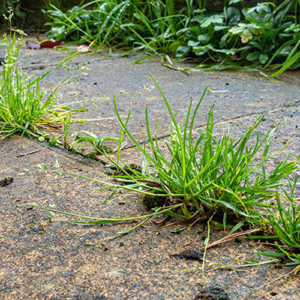
Curbs + Cracks
Weeds don’t just grow in lawns and flowerbeds—they can quickly take over curbs, pavement cracks, driplines, driveways, and other hard-to-maintain areas.
Lynch Landscaping offers targeted weed control treatments to help eliminate unwanted growth and keep these areas looking clean and maintained throughout the season.
Japanese knotweed, poison ivy, and unwanted weeds can be difficult to control and can quickly spread into areas where you don’t want them. Weeds growing along curbs, cracks, walkways, driveways, and driplines can also become an ongoing problem without proper treatment.
Lynch Landscaping offers custom treatment programs for these targeted areas, designed around the type of unwanted vegetation, where it’s growing, and the level of control needed.
Progam Schedule.
Japanese knotweed: Best treated in late summer through early fall, typically August through September, when the plant is moving nutrients down into its roots. This helps the treatment reach the extensive root system. Cutting beforehand can interfere with effective treatment.
Poison ivy: Generally treated during the active growing season, late spring through early fall, once leaves are fully developed and the plant is actively growing.
Weeds in curbs, cracks, walkways, driveways & driplines: Can be treated throughout the growing season, generally spring through fall, whenever weeds are actively growing. Multiple treatments may be needed as new weeds emerge.
Get Started.
Getting started is easy. If you’re dealing with Japanese knotweed, poison ivy, or unwanted weeds growing in curbs, cracks, walkways, driveways, or driplines, give us a call and tell us a little about the problem areas and your concerns.
We’ll schedule a consultation to look over the areas, identify the unwanted or invasive growth, assess how widespread it is, and determine the best course of action. From there, we can provide pricing for a custom targeted treatment program designed specifically for your property and problem areas.
For persistent or invasive growth, follow-up treatments and seasonal programs can help control regrowth and keep these problem areas manageable year after year.

Not always. Japanese knotweed, poison ivy, and other persistent weeds are very hardy, establish easily, and can spread quickly. Because of this, complete control can take several treatments and, in some cases, a couple of years.
While it may take time to fully get the problem under control, each treatment should show significant improvement, with less growth and regrowth as the treatment program continues.
Japanese knotweed typically grows in dense patches and has tall, hollow, bamboo-like stems with broad, heart- or shovel-shaped leaves. It can grow very quickly and often reaches several feet tall.
Poison ivy is best known for its “leaves of three.” Each leaf has three leaflets, and the plant may grow along the ground, as a shrub, or as a climbing vine.
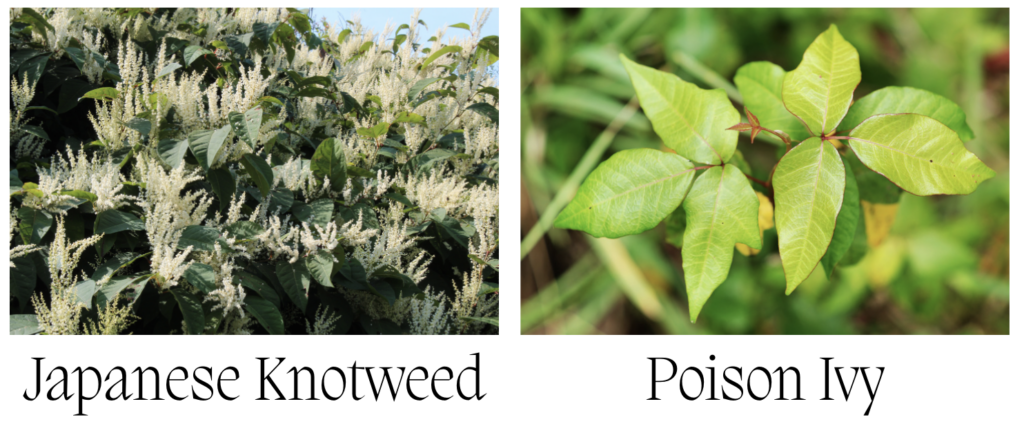
If you’re unsure what’s growing on your property, don’t pull, cut, or handle it. Lynch Landscaping can help identify the problem area and recommend the appropriate treatment.
Yes. Our treatments are carefully and strategically applied to target Japanese knotweed or poison ivy while minimizing impact on the surrounding property. We take into consideration nearby lawns, trees, shrubs, flowerbeds, and other desirable plants when determining how and where to treat.
Because some products used to control these invasive plants can also damage other vegetation if directly contacted, careful application is important. Before treatment, we’ll evaluate the area and determine the best approach for your property.
Reach out to get the ball rolling. Once we take down some basic information (name, address, contact information), we can schedule an appointment for you to meet with our consultant. They will show up, take some photos, measurements, and come up with a treatment plan. All estimates and information will be sent over to you by email.
Japanese knotweed and poison ivy can both become difficult to manage once established, but for different reasons.
Japanese knotweed is an aggressive invasive plant that spreads quickly and can take over areas of your property, crowding out other plants. Its extensive underground root system makes it extremely difficult to remove, and cutting, mowing, or digging it improperly can actually help spread it.
Poison ivy can spread throughout lawns, flowerbeds, wooded areas, and along property edges. Contact with the plant can cause an itchy, uncomfortable rash for many people, making affected areas of your property difficult to safely enjoy or maintain.
Treating these plants early can help prevent them from continuing to spread and becoming a larger problem.
Both Japanese knotweed and poison ivy can grow in many different areas around your property.
Japanese knotweed is commonly found along roadsides, property lines, ditches, riverbanks, disturbed areas, and the edges of lawns or wooded areas. It often grows in large, dense patches and can spread quickly once established.
Poison ivy is commonly found along wooded areas, fence lines, trails, gardens, flowerbeds, and property edges. It can grow along the ground, as a shrub, or as a climbing vine on trees and other structures.
Both can easily go unnoticed until they begin spreading into areas you regularly use or maintain.
